I do not fear death. Death, if anything, appears to me as a resolution. An ontological closure of the lived question. It is not the cessation of being that disturbs me, nor the impossibility of experience beyond it. What unsettles me, what returns in thought with a kind of recursive intensity, is the possibility that the structure of time itself may fail before consciousness fully dissolves. The fear, if it deserves the term, lies not in dying, but in the way the perception of time might collapse in the final moments of neurological disintegration. It is a fear rooted not in metaphysics, but in phenomenology and neuroscience, and yet it carries an existential weight that philosophy has not fully addressed.
Our experience of time is not given from without. It is not a passive encounter with chronological succession, but an active synthesis constructed by the mind. Time, as experienced, is not an external metric but an interior rhythm. Husserl, in his lectures on internal time-consciousness, characterized temporal perception as constituted through a triadic structure: retention, which holds the immediate past in view; protention, which anticipates the future; and the primal impression, the living present. Consciousness of duration arises through the interplay of these three. Time, for the subject, is not a line but a horizon assembled from within.
This temporal synthesis, however, is biologically fragile. It relies on a functioning interplay between cortical and subcortical structures, especially the hippocampus, prefrontal cortex, and thalamic circuits. The moment these structures begin to fail: as they do in hypoxia, traumatic injury, or sudden neurophysiological collapse; there is no guarantee that time, as an experience, will fade in an orderly fashion. On the contrary, the very mechanisms that allow us to experience time as flow may be the first to fail, leaving behind fragments of sensation unanchored from sequence.
Clinically, we know that death is not instantaneous. Cardiac arrest may halt circulation within seconds, but measurable EEG activity has been observed for several minutes thereafter. A 2017 Canadian study recorded continued neural oscillations in a patient for more than ten minutes following cardiac death, though the phenomenological content of such activity remains unknown. The brain dies in a cascade, not in a single gesture. The most metabolically sensitive areas, such as the hippocampus, are the first to deteriorate. These are precisely the regions responsible for encoding memory and supporting continuity. In their absence, what remains may not be unconsciousness, but a form of perception that has lost its capacity to orient itself in time.
It is here that the fear takes root. If a final fragment of consciousness persists at the edge of death, it may find itself severed from time not because time has ended, but because the apparatus by which time is experienced has disintegrated. In this condition, there may be sensation, but no succession. A final visual or auditory impression may flicker in the dying brain, but with no retention to link it to a past and no protention to carry it toward a future, it would remain suspended, self-contained, and inescapable. The experience of the present would no longer be fleeting. It would no longer be part of a stream. It would simply be.
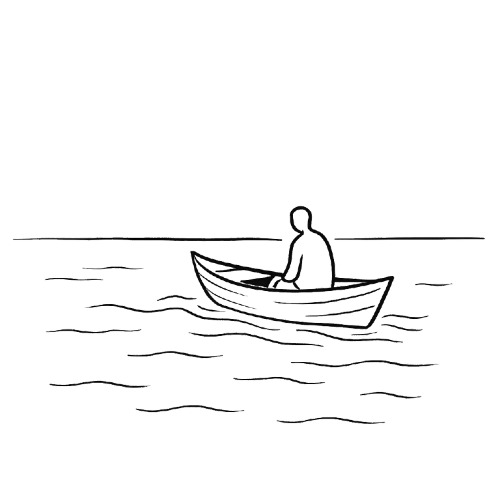
What would it mean to inhabit such a moment? One cannot say that it lasts forever, because the concept of duration presupposes a before and an after. Yet from within that moment, if consciousness persists at all, there would be no way to determine its limits. It would be an absolute now; one that cannot be measured, because the very conditions for measurement have failed. This is not the eternity of theological speculation. It is not the afterlife or the soul. It is a phenomenological eternity, one born from cognitive collapse, where even the grammar of time has unraveled.
I am calling this condition chronostatic inversion. It refers to the inversion of time’s normal structure within the dying brain: the present no longer serves as the nexus between memory and anticipation, but becomes a terminal event unmoored from succession. Time does not stop, but becomes illegible. The brain, incapable of forming continuity, generates a temporality that is not stretched but collapsed. Dense, unrelieved, and epistemically sealed. This is not merely a slowing of time. It is the collapse of time’s very intelligibility within consciousness.
This is a space that remains underexplored in both philosophy and neuroscience. Even Heidegger, who placed death at the center of Dasein’s self-understanding, assumed that time remains structurally intact up to the final moment. The dying self still projects its being-toward-death. Yet this model presumes a continuity of temporal structure that may not hold at the threshold. What if death is not the crossing of a threshold, but the dissolution of the corridor itself? What if the last experience is not of time coming to an end, but of time ceasing to exist as experience?
We must take seriously the possibility that the dying mind may undergo not a passage, but a collapse into presence without depth. A presence that cannot be escaped not because it is infinite in size, but because it lacks the conditions under which size or duration can be recognized. This is not a theological horror, nor a moral one. It is a structural failure of the system that makes experience coherent. And it is precisely this incoherence that resists resolution.
If chronostatic inversion occurs, we would have no access to it. It would be phenomenologically sealed. The final moment would contain no reportable content, no memory, no narrative. It would be a chamber without sequence, without time, without exit. The silence of the dead may not be the silence of nothingness, but the silence of something that cannot be translated into duration. That is what unsettles me. Not death, but the possibility that the last experience is one in which experience itself loses its form.
To be conscious in a moment that cannot pass is not to suffer, strictly speaking. Suffering requires the sense of time. It is, rather, to exist in a state beyond negation, where the concept of ending no longer applies. It is to inhabit a second that does not die because it was never born. Such a condition, if it occurs, would mark the outermost boundary of experience. And it would do so not with pain, but with structureless presence. A final cognitive remainder. The last consequence of being alive.


 Paimana
Leave a comment