The first time I saw Deleuze and Guattari’s work, I was twelve years old. Anti-Oedipus sat strangely prominent on my sister’s bedside table, who, at eighteen, was already absorbed in things I didn’t yet have the language to understand. I remember the cover, the strange title, the way the book seemed almost out of place among her other reading. At that age, I had no real concept of philosophy beyond the vague notion that it belonged to a world of difficult books and distant ideas. But Anti-Oedipus stuck with me. Not its content, of course, but its presence, its weight. It was a book that felt important, though I couldn’t have said why.
Years later, when I finally picked it up for myself, I was no longer the younger sibling looking curiously at something beyond my reach. I had left home at seventeen, moving through different cities, different countries, adjusting and readjusting to new environments. I was never in one place long enough to believe in permanence, never attached to a particular narrative about where I should be going. When I finally started reading Deleuze and Guattari, it wasn’t just an academic exercise, but rather a framework that gave shape to something I had already been experiencing. Their writing felt less like a revelation and more like a confirmation of something I had always suspected but had never been able to articulate: that desire is not a lack, that identity is not fixed, and that capitalism, for all its promises of movement and progress, is a machine that keeps us running in place. I don’t know what I want to do and hence I don’t care if I wanna do something I want
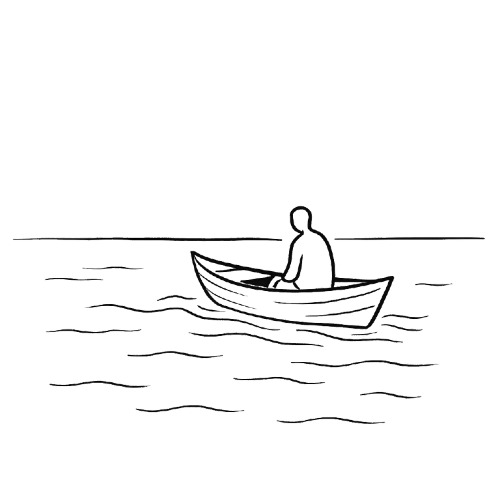
At first, I thought I had left home to move toward something, but with time, I realized I had left simply to avoid stopping. Motion itself had become the only recognizable structure of my life, not tied to an end goal, but to a feeling. The hum of possibility. The refusal of containment. And yet, every place I lived, every version of myself I tried on, seemed to pull me back toward something familiar, something structured, as if the very systems I had wanted to escape were embedded within me, resurfacing wherever I went.
Desiring-Production and the Myth of Lack
Western thought has long constructed desire as absence, as the shadow cast by something missing. Freud’s psychoanalytic model positions desire as emerging from repression, an unfulfilled longing for something forbidden or lost. Lacan extends this logic into the realm of language, where desire is inscribed in the symbolic order, always orbiting an unattainable object, always structured around a fundamental manque-à-être, a “lack of being.”
Even outside psychoanalysis, the economy of lack permeates philosophy, politics, and daily life. Religion presents desire as temptation, a longing that must be controlled or purified. Capitalism, with its ever-replenishing catalog of commodities, constructs an economy of desire where satisfaction is perpetually deferred. Just beyond reach. Just one more purchase. Just one more promotion away. The logic remains consistent: desire is structured by what it does not have.
But Deleuze and Guattari dismantle this entire framework, revealing it as a historical construct rather than an ontological given. Desire, in their model, is not an emptiness yearning to be filled but a machine, a system of connections, a continuous flow of production. They propose that the unconscious is not a theater of symbolic representation, not a space where hidden meanings and forbidden impulses are staged, but a factory, a network of desiring-machines.
This idea finds a poetic parallel in Ghalib’s verses.
یہ نہ تھی ہماری قسمت کہ وصالِ یار ہوتا
اگر اور جیتے رہتے، یہی انتظار ہوتا۔
(It was never in my fate to be united with my beloved.
Had I lived longer, only this waiting would have endured.)
Ghalib’s lament is not about missing something that could have completed him. It is about the inescapable condition of longing itself, a cycle that would not have ended even if he had lived longer. This resonates with Deleuze and Guattari’s rejection of lack. Desire is not about reaching an endpoint, nor is it defined by the absence of something external. It is an engine that keeps moving, producing, and assembling itself anew.
Similarly, Deleuze and Guattari’s concept of desire is one of motion, of endless becoming, where production never halts but continuously reconfigures itself. In contrast to the Freudian economy of scarcity, desire does not emerge because of repression. It exists in its own right, as a force that does not require justification or completion.
Capitalism’s Schizophrenic Machinery
Deleuze and Guattari argue that capitalism, unlike previous social formations, does not function primarily by rigid coding but by decoding and deterritorialization. Traditional societies structured social relations through codes. Religious laws. Feudal hierarchies. Guild systems. These dictated every aspect of life. Capitalism, by contrast, breaks down these codes, turning land into property, labor into wages, social roles into flexible transactions.
Yet capitalism cannot sustain itself purely through deterritorialization. It must simultaneously reterritorialize, establishing new forms of control to keep desire from escaping completely. This is the paradox: capitalism requires movement but fears its consequences. It unleashes new flows—of money, of labor, of identity—only to recapture them within controlled enclosures: the nation-state, the corporation, the nuclear family.
I’ve felt this, moving through different cities and different versions of myself. The thrill of reinvention, the promise of something new, always followed by the creeping realization that I am just being slotted into another structure, another role. Capitalism makes you feel like you are always on the edge of escape, just about to break free, but the moment you take a step, the landscape shifts, the rules change, and suddenly you are back inside, running on a different treadmill but still running.
This mirrors a fundamental concept in Vedantic thought: Maya, the grand illusion, in which life is structured by an endless loop of becoming, yet this becoming is never truly free. Just as capitalism seduces us with an illusion of boundless possibility while keeping us chained to labor and consumption, Maya entraps the self in layers of illusion. As Adi Shankara writes in Vivekachudamani:
“برہمن ہی سچ ہے، باقی سب سراب”
(“Only Brahman is real; everything else is a mirage.”)
Capitalism, like Maya, presents itself as infinite, a field of infinite potential, yet it is precisely this illusion that prevents us from seeing the structure that holds us in place.
Oedipus and the Psychoanalytic Prison
One of the most insidious ways capitalism controls desire is through Oedipus.
Freud, and later psychoanalysis, reduces desire to a family drama, to a suffocating triangle of mother-father-child. No matter what we feel, no matter what we dream, it must all return to the family, must all be interpreted as a longing for parental figures, a guilt over repressed instincts, a need for authority or submission.
But why? Why must desire always return to the same figures, the same framework?
For Deleuze and Guattari, Oedipus is not a universal truth. It is a form of repression, a way of capturing desire, forcing it into pre-approved paths. The unconscious does not naturally speak in Oedipal terms; it is forced to, trained to, made to through years of social conditioning and psychoanalytic interpretation.
And the goal? To keep desire from breaking free. To keep it from spilling out of the family and into the world, where it might attach itself to something unpredictable, something dangerous, something that capitalism and psychoanalysis cannot control.
The Schizophrenic Future
To embrace the schizo is not to embrace chaos, nor is it to reject all structure. It is to recognize that the systems that claim to define us, such as capitalism, psychoanalysis, the family, the state, are not natural, are not inevitable, are not the only way to live.
For the past year, as I’ve read Deleuze and Guattari, I have felt these ideas working their way through me, unraveling assumptions, pulling apart the structures I once took for granted.
Maybe that’s what I’ve been doing since I left home: following those cracks, resisting the easy enclosures, refusing to settle. Maybe it’s not about where I end up, but about staying in motion, staying open, staying schizo.
Maybe this essay is just another flow, another anarchic pulse, another machine, just one more moment of production. Perhaps that’s all it ever needed to be.


 Paimana
Leave a comment